About DSTI The school and its direction
On this page
Overview Identity How DSTI teaches DSTI in practice Founding direction Next step
About the school

A specialist engineering school, built carefully since 2015.

DSTI School of Engineering is a French higher education institution focused on computing, data, artificial intelligence and cyber security. It was created as a focused school rather than a generalist institution: technical, international, English-led and designed from the start for connected study across campuses and online access.

01 — Identity

Focused by design.

DSTI is built around a narrow and demanding academic territory: computing, data, artificial intelligence, cyber security and the systems that make these fields operational.

Specialist

Not a generalist institution

The school concentrates its energy on digital engineering fields rather than trying to cover every discipline. This gives the programmes a clear academic centre and a practical professional purpose.

International

English as a working language

English is not only the language of teaching. It is part of the school’s operating environment, staff life, student life and international recruitment approach.

Connected

One school, several access routes

Paris, French Riviera / Sophia-Antipolis, Live Streamed and Online asynchronous study are not separate schools. They are different access routes to the same academic expectations.

02 — How DSTI teaches

Technical depth, practical use, close academic follow-up.

What matters is not the appearance of modernity, but whether students are prepared to understand systems, build responsibly, work with professional tools and keep progressing when the field changes.

DSTI’s teaching culture combines theoretical foundations, applied work, professional tools, certifications, projects, internships and Direction of Studies follow-up.

Foundations before shortcutsComputer science, mathematics, systems, data and security are treated as engineering subjects, not as fashionable labels.
Professional practiceStudents work with technical workflows, projects, infrastructure, data platforms and tools used beyond the classroom.
Hybrid expertiseDSTI was designed for connected education from its early years, with on-campus, Live Streamed and asynchronous study routes.
Individual progressionAcademic operations and Direction of Studies support students through admission, study rhythm, progress and practical decisions.
03 — DSTI in practice

A specialist school with an international scale.

The school remains focused, but it is not experimental or informal. It has a coherent portfolio, an international student body, a graduate community and a faculty built around academic and professional experience.

400students per year, in a focused portfolio of programmes.
1,200+alumni in the DSTI graduate community.
80%international students across the school.
95%+typical employability rate six months after graduation.
The point is not to be huge.DSTI aims to remain a sizeable specialist school: selective, technical, international and close enough to its students to keep academic support personal.
04 — Founding direction

Built by people with engineering, industry and international experience.

This page is not about personal promotion. The founding direction matters because it explains the school’s tone: technical seriousness, international openness, operational discipline and a preference for substance over noise.

José Massol
Co-founder · President

José Massol

José Massol brings long experience in international business development and general management across high-technology sectors, including aerospace, defence and advanced industries. After a career in international management, he created Vintium International, a consulting and business-angel structure supporting international development and innovative companies.

LinkedIn profile
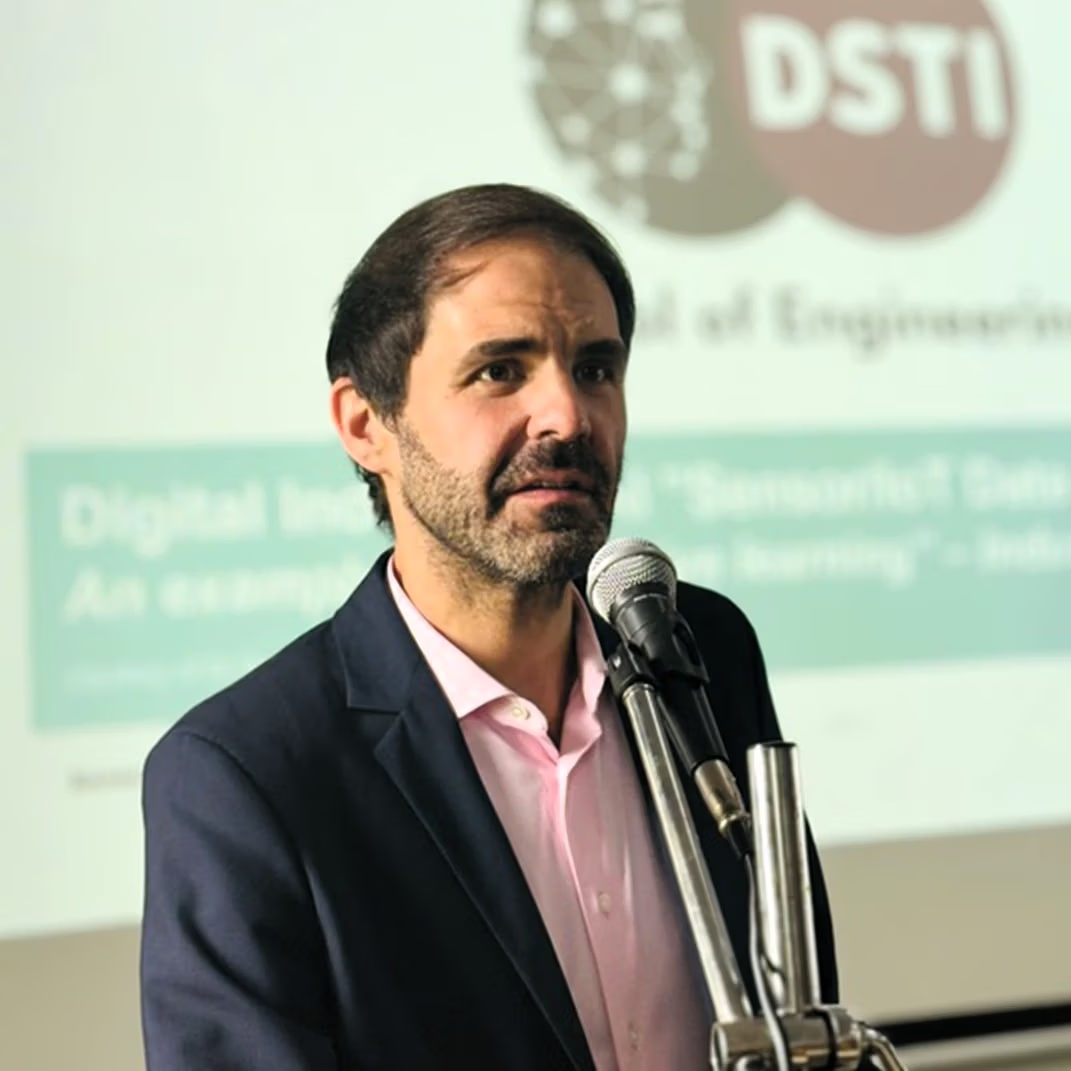
Sébastien Corniglion
Co-founder · CEO

Sébastien Corniglion

Sébastien Corniglion is an information systems engineer and data professional. At DSTI, his role has combined institutional leadership, academic direction, curriculum development, teaching and the design of the school’s technical infrastructure. His background links computer science, software and data engineering, business systems and higher-education operations.

LinkedIn profile
05 — Next step

Understand the school, then choose the right route.

The best starting point depends on your level and your objective: Bachelor, MSc, Executive MSc, Live Streamed or Online asynchronous study.