
Industry 4.0, data and AI, with real engineering culture.
As industries combine data, automation, AI and connected systems, engineers need to specify, integrate and manage digital solutions without losing sight of physical and industrial systems.
The programme combines the industrial heritage of Arts et Métiers with DSTI’s expertise in data, AI and digital systems. Founded in 1780, Arts et Métiers is France’s second-oldest industrial engineering school; DSTI adds a specialist data, AI, cloud and cyber security environment.
As industries combine data, automation, AI and connected systems, engineers need to specify, integrate and manage digital solutions without losing sight of physical and industrial systems.
Recently graduated engineers, industrial generalist engineers or equivalent university profiles in engineering.
Add data, AI, cloud, cyber security, visualisation and digital twins to an initial engineering education.
Weeks on / weeks off, applied projects and a final internship connect the coursework to real industrial situations.
The specialisation gives engineers an operational reading of data, AI and digital infrastructures applied to complex industrial environments.
Frame needs, data, algorithms, interfaces and assessment criteria for an AI solution adapted to industry.
Understand acquisition, databases, quality, governance and security of industrial data.
Apply, interpret and critique data processing, machine learning and optimisation methods.
Explain, design and support digital twins to improve operations and decisions.
The rhythm combines teaching weeks, weeks away from class, practical work, projects, certification preparation and a final internship. It is designed for candidates who already hold an engineering degree or equivalent engineering background.
The programme requires B2 English for non-native applicants. Teaching is delivered in English; project work and the final internship in France are reviewed with the programme teams according to each candidate’s situation.
Students may be based in Paris, Sophia-Antipolis or on the ENSAM Bordeaux-Talence campus. Live Streamed access may be possible in France only, depending on academic and organisational compatibility.
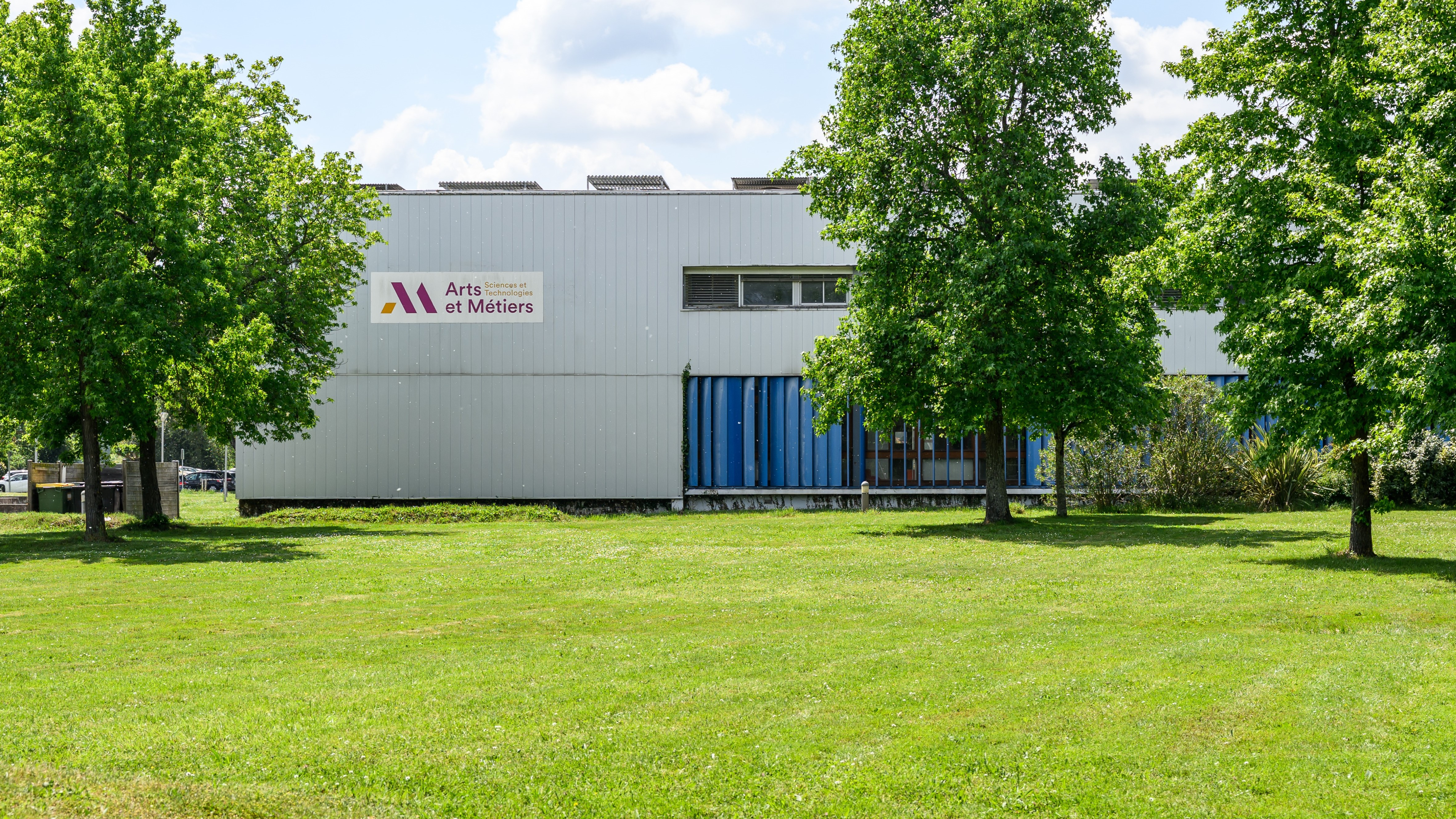
The Bordeaux-Talence campus complements DSTI’s Paris and Sophia-Antipolis anchors for this joint programme.
Discover Bordeaux-Talence campusA dense environment for companies, engineering, consulting, data and innovation.
DSTI’s French Riviera campus is located in Europe’s first science and technology park.
Live remote attendance may be possible for students already based in France.
The curriculum covers the building blocks needed to move from data analysis to the integration of digital solutions in industrial environments.
Big vs Smart Data, reporting, visualisation and preparation for Microsoft Power BI.
Python Machine Learning Labs, time series, neural networks, model reduction and hybridisation.
Statistics, probability, optimisation and numerical simulation.
Security principles, design patterns, encryption, code safety and system protection.
SQL, AWS, inter-system communication, Industrial Digital Twins, Virtual Reality and Augmented Reality.
Practical projects around ML models, visualisation, secure infrastructures and industrial-process optimisation.
The programme prepares students for two widely recognised external certifications, but neither certification is required to graduate. The value is positive and practical: students can use the preparation to strengthen their profile in cloud architecture, reporting and visualisation.
Preparation for certifications is embedded in relevant coursework. Students may choose to sit the external exams when it supports their project, but graduation remains based on the academic programme, projects and final internship.


Prepared through cloud, infrastructure and systems-integration coursework.
Official certification pagePrepared through reporting, visualisation and data-engineering coursework.
Official certification pageStudents also benefit from DSTI’s learning ecosystem, including DSTI Learn, AWS Academy, Microsoft Learn for Educators, Microsoft Azure for Education, O’Reilly and dedicated technical environments where relevant.
The programme leadership combines industrial systems knowledge, engineering science and specialist teaching in data, AI and digital infrastructures.
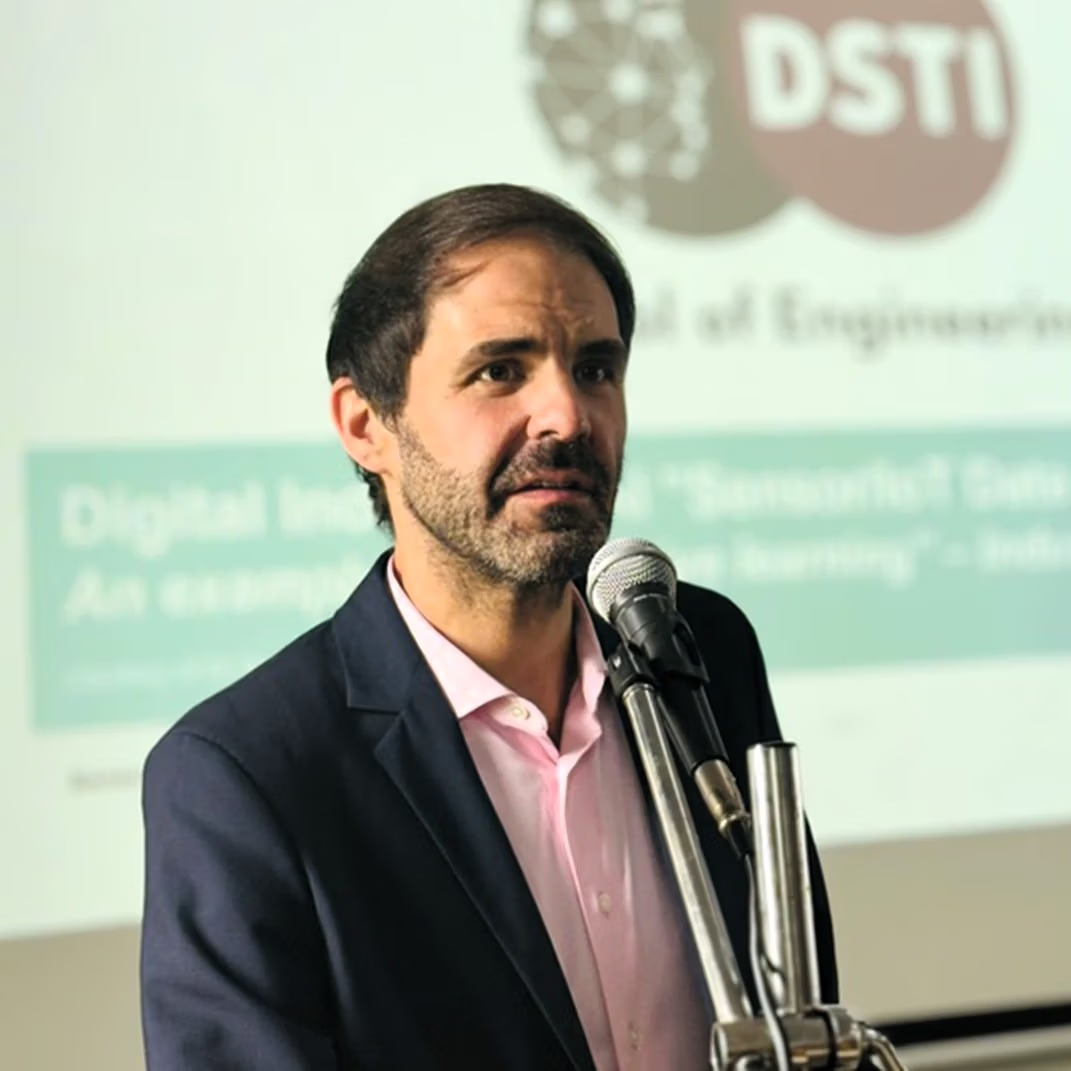
Chief Executive Officer of DSTI School of Engineering, information-systems engineer and teacher in data, information systems and digital infrastructures.
LinkedIn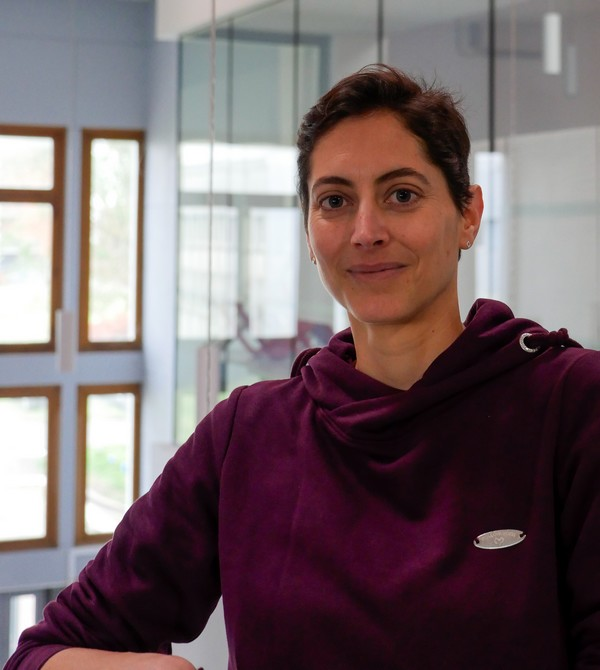
Professor at Arts et Métiers, specialist in engineering science and modelling for advanced industrial environments.
LinkedInThe programme is selective. Applications are submitted and followed through the ENSAM system, with review of academic background, project fit and language prerequisites.
The programme is aimed at engineering graduates and equivalent university profiles in engineering, preferably industrial engineering.
This level is required for non-native speakers so they can follow classes, contribute to projects and complete the programme successfully.
The format requires a situation compatible with a weeks-on / weeks-off study rhythm and a final internship in France.
The official application is submitted through the ENSAM system.
Open ENSAM platformGraduates can target roles linked to industrial AI, industrial digital systems, digital twins, cloud, data and digital transformation.
If your profile matches a postgraduate specialisation after an engineering degree or equivalent background, start with the ENSAM platform or speak with DSTI to check your project.